Common mistakes hiring wedding florists in Finsbury Park
Posted on 16/10/2026
Hiring a wedding florist sounds straightforward until you start comparing bouquets, buttonholes, delivery windows, and all the tiny details that sit behind the pretty pictures. In reality, common mistakes hiring wedding florists in Finsbury Park often come down to timing, clarity, and not asking the right questions early enough. One couple may fall for a dreamy Instagram feed and miss the practical stuff. Another may focus only on price and end up with flowers that look fine on paper but don't quite hold up on the day. Let's face it, weddings are busy enough without floral stress creeping in at the last minute.
This guide breaks down the mistakes people make, why they happen, and how to avoid them in a way that feels calm and doable. Whether you are planning a small ceremony or a bigger local celebration, you will find useful advice here for choosing wedding flowers with much less guesswork.
Table of Contents
- Why these mistakes matter
- How wedding florist booking works
- Key benefits of choosing carefully
- Who this guide is for
- Step-by-step guidance
- Expert tips for better results
- Common mistakes to avoid
- Tools, resources and recommendations
- Law, compliance, standards, and best practice
- Options and comparison table
- Case study or real-world example
- Practical checklist
- Conclusion
- Frequently asked questions
Why Common mistakes hiring wedding florists in Finsbury Park Matters
Wedding flowers do more than fill a room. They set the tone, connect the colour palette, frame the ceremony, and make the photographs feel cohesive. In a busy area like Finsbury Park, where venues can vary from intimate spaces to larger local restaurants and halls, the florist also has to work around access, timing, and setup logistics. That is where mistakes tend to snowball.
A poor florist choice can show up in small ways first: a bouquet that feels too large to hold comfortably, buttonholes that wilt before the ceremony, or arrangements that arrive with no clear setup plan. Then it becomes bigger. You may end up reshuffling the schedule, borrowing decor elsewhere, or spending more than expected because the original brief was not specific enough.
Expert summary: most floral problems do not begin with bad flowers. They begin with bad assumptions. A couple assumes the florist knows what they mean. The florist assumes the couple knows what flowers cost in season. Nobody says the awkward bit out loud, and that is when plans drift.
Finsbury Park couples also need to think locally. Delivery timings in North London, loading space near venues, and venue rules around candles, petals, or installation all affect the final result. The floral design might be lovely, but if it cannot be delivered and set up smoothly, the experience loses its shine.
How Common mistakes hiring wedding florists in Finsbury Park Works
The florist booking process usually looks simple at first. You enquire, share your date, talk through ideas, receive a quote, and confirm the order. But beneath that there are several moving parts: flower choice, seasonality, scale, labour time, transport, setup, and breakdown if needed. Missing just one of those can create a mismatch between expectation and reality.
Here is the basic flow most couples go through:
- You outline the wedding date, venue, theme, and estimated guest count.
- The florist suggests arrangements, bouquet styles, and suitable flowers for the season.
- A quote is prepared, often based on design time, labour, flower choice, and delivery.
- Samples, references, or collection images may help refine the brief.
- The order is confirmed, then final details are usually checked a few weeks before the wedding.
The mistake is often skipping the middle part. People send inspiration images and expect the florist to read between the lines. But what looks light and airy in one photo can mean very different stems, mechanics, and costs in real life. A wedding bridal bouquet may appear simple, for example, while actually requiring careful stem selection to stay fresh and balanced through the day.
In practice, good florist communication is a bit like fitting a suit. It is not just about liking the colour. It is about the fit, the feel, the movement, and whether it still looks right after a long day of hugging relatives and navigating taxis. Not glamorous, perhaps, but very real.
Key Benefits and Practical Advantages
When you avoid the usual mistakes, the benefits are more than cosmetic. You get fewer surprises, a calmer lead-up to the wedding, and flowers that actually work with the venue and schedule you have planned.
- Better value for money: clearer briefs reduce redesigns and unnecessary add-ons.
- More reliable timing: early planning helps delivery and setup happen without panic.
- Stronger visual cohesion: bouquets, table flowers, and ceremony pieces can all feel connected.
- Less last-minute stress: the florist knows what is expected, so fewer things are left to chance.
- Better longevity: appropriate flower choices last longer in the conditions of the day.
There is also a psychological benefit that gets overlooked. When the flowers are sorted properly, you stop thinking about them. That sounds small, but on a wedding day, small is huge. You want to notice the scent as you walk in, the colour against the dress, the way the table arrangements soften the room, not whether the bouquet is drooping by 4 p.m.
For couples browsing local options, pages such as wedding flowers in Finsbury Park and the broader Finsbury Park florist service can be useful starting points when you are still comparing styles and capabilities.
Who This Is For and When It Makes Sense
This guide is for anyone planning a wedding in or around Finsbury Park who wants flowers to feel intentional rather than improvised. That includes couples arranging a small registry-style ceremony, larger multicultural celebrations, and people supporting a bride, groom, or family member with planning.
It also helps if you are in any of these situations:
- You are booking a florist for the first time and do not know what to ask.
- You have a clear mood board but not a clear budget.
- You are comparing several florists and need a fair way to judge them.
- You have a venue with unusual access, tight timing, or setup restrictions.
- You want simple, elegant arrangements rather than a big production.
It makes sense to think about florist selection early, especially if your wedding is in spring or summer when demand is usually higher. The sooner you decide on style and scope, the easier it is to keep everything aligned. Truth be told, couples often leave flowers until the fun part of planning, then realise the details are more technical than they expected.
If you are also managing other event flowers, it can help to review how a florist handles different occasions. That gives a useful sense of range. Pages like flower delivery in Finsbury Park and flower shops in Finsbury Park can support that wider comparison when you are getting a feel for the local service style.
Step-by-Step Guidance
If you want to avoid the typical pitfalls, use a calm, structured approach. It does not have to be complicated.
1. Start with the venue and date
Before you compare bouquet styles, think about the venue. Does it have a narrow entrance? Does it allow early access? Is there enough table space for centrepieces? A floral plan should fit the room, not fight it. A charming little ceremony space needs a different approach from a larger dining setup.
2. Decide what flowers actually matter most
Not every part of the wedding needs a huge floral spend. For some couples, the bridal bouquet and ceremony focal point are the priority. For others, the tables matter most because guests will spend more time near them. Decide where the eye should land first.
3. Be honest about your budget
This is the bit people often avoid, which is understandable. Still, if a florist does not know the budget range, they cannot guide you well. A good florist can suggest seasonal substitutions, simpler mechanics, or a smarter allocation of flowers across the day.
4. Share inspiration, but explain what you like about it
Do not just send five photos and hope for magic. Say what appeals to you: the colour, the looseness, the amount of greenery, the shape of the bouquet. That extra context saves everyone time.
5. Ask about freshness, delivery, and setup
Flowers are living things, not showroom props. Ask when they will be prepared, how they will be transported, and who will place them at the venue. If there are centrepieces, buttonholes, or table arrangements, the logistics should be spelled out in plain language.
6. Confirm final details in writing
One of the biggest mistakes is relying on memory. By the time the wedding week arrives, everyone is busy. Get the essential points in writing: style, stems, quantities, timing, and any venue restrictions. That way there is less room for "I thought we meant..." moments.
Expert Tips for Better Results
In our experience, the best floral outcomes usually come from clarity rather than extravagance. Fancy is fine, but clear is better.
- Choose flowers with the season in mind. Seasonal blooms tend to be more reliable and often give better value. A florist can suggest alternatives if your first choice is not practical.
- Think in terms of impact points. A striking bouquet, well-dressed ceremony front, and a few thoughtful table pieces often look more polished than many small, disconnected items.
- Match flowers to the dress, suit, and room lighting. Soft ivory flowers can look very different under warm evening light compared with daylight.
- Consider scent carefully. Some flowers are beautifully fragrant, but a strong scent can be overwhelming in a small room.
- Ask how the flowers will photograph. This sounds a little extra, maybe, but it matters. A design that looks stunning in person should also hold up in pictures.
Another useful habit: keep your inspiration board realistic. A cascading luxury bouquet may be lovely, but it may also require more structural work, different flower varieties, and a bigger budget. That is not a problem, just something to plan for. The issue comes when the idea and the spend are not on speaking terms.
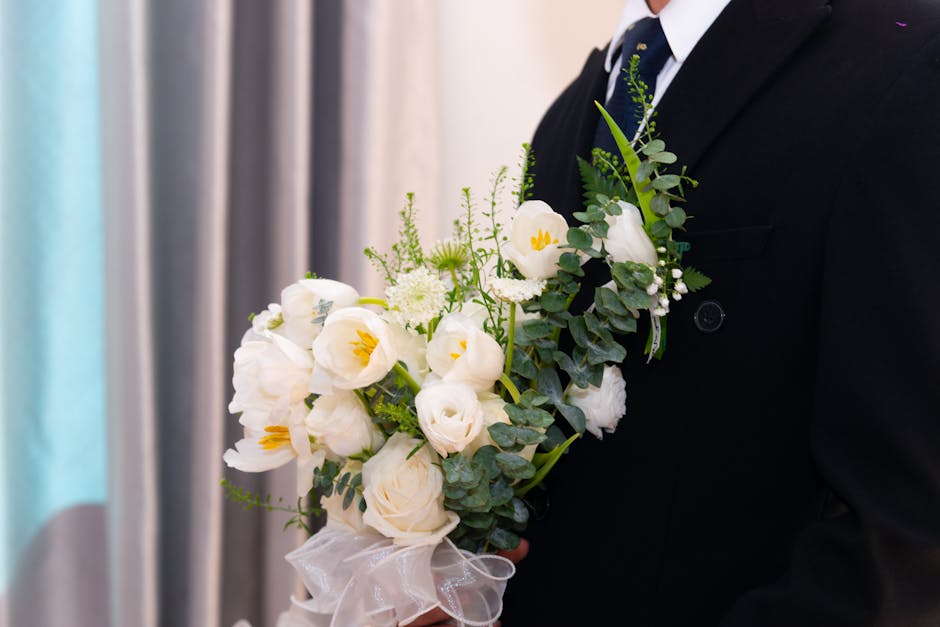
For bridal party pieces, look closely at matching sets rather than picking items one by one. A collection such as wedding bridesmaid bouquets or wedding buttonholes can help keep the look coordinated without making the order feel fragmented.
Common Mistakes to Avoid
Here is the heart of it. These are the mistakes that cause the most frustration, and they are usually easy to avoid once you know what to look for.
1. Choosing purely on price
A low quote can be tempting, especially when wedding costs pile up quickly. But the cheapest option is not always the best fit. Sometimes the price is low because the design is simpler than you imagined, or because delivery and setup are not included in the way you assumed. Ask exactly what is covered.
2. Not checking the florist's wedding experience
Wedding work is different from everyday flower arranging. Timing is tighter, expectations are higher, and the flowers need to last through a longer day. A florist may be brilliant at retail bouquets but less experienced with larger event logistics. Fair enough, not every florist does every job.
3. Failing to discuss the venue properly
Venue access can make or break the floral schedule. If there is limited loading access, parking issues, staircases, or a fixed setup window, the florist needs to know. Otherwise the best design in the world can become a practical headache.
4. Ignoring seasonality
Some flowers are available year-round, some are not, and some vary in quality depending on the season. If you fall in love with a stem that is out of season, the florist may need to substitute. That is normal. The mistake is not planning for it.
5. Leaving buttonholes, corsages, and table pieces as an afterthought
Smaller items still matter. They tie the event together and are often among the last things noticed if they go wrong. Buttonholes that are too bulky, or table arrangements that are too tall, can quietly spoil the polish of the day.
6. Skipping a written final confirmation
Even a very friendly conversation can blur details. Write down the key decisions. It is simple, slightly boring, and extremely useful.
7. Overloading the brief with too many references
One classic mistake: you send twelve inspiration photos, each with a different style. Loose garden bouquet, then tight roses, then dried accents, then tropical colour. That can leave the florist guessing which direction actually matters. Pick the common thread.
8. Forgetting about transport and presentation
If flowers need to move from studio to venue, ask how they will be packed and delivered. Some arrangements are designed to travel well; others need more careful handling. If no one mentions this, ask. It is not fussy. It is smart.
Tools, Resources and Recommendations
You do not need special software to plan wedding flowers, but a few simple tools can keep everything tidy.
- Mood board: use saved images to show style, colour, and structure.
- Guest and table plan: helps you estimate how many centrepieces or accent pieces are needed.
- Venue floor plan: useful for figuring out what can fit where.
- Budget note: keep a rough line for flowers so spending decisions stay grounded.
- Checklist of must-have items: bouquet, bridesmaid bouquets, buttonholes, table flowers, ceremony flowers, extras.
If you are comparing designs, it can also help to browse specific wedding product ranges so you can speak in more concrete terms. For example, wedding table arrangements give a sense of centrepiece styles, while wedding flowers and collections can help you understand how a florist groups products for a complete day.
A practical recommendation? Save screenshots of anything you dislike as well as what you love. That sounds a bit odd, but it makes the brief sharper. Sometimes "not this shape" is more helpful than a paragraph of vague praise. Human brains are funny like that.
Law, Compliance, Standards, or Best Practice
Wedding floristry is not usually a heavily regulated purchase in the way some professional services are, but there are still sensible standards and best practices to keep in mind. If you are hiring in the UK, check the florist's terms, refund policy, delivery arrangements, and any cancellation conditions before you confirm. Those details matter if your date changes or the order needs adjusting.
It is also wise to think about venue rules. Some venues limit open flames, restrict petal use, or ask suppliers to protect floors and surfaces. Floral installations may need to be safe, stable, and set up with care. If there are arches, hanging pieces, or larger freestanding displays, the florist should explain how they are supported.
Best practice also includes freshness, handling, and honest product communication. If a stem substitute is needed, a good florist should say so rather than hoping nobody notices. That kind of transparency builds trust. You do not need technical jargon, just straight answers.
If sustainability matters to you, ask how flowers are sourced and what happens to reusable materials. The exact approach varies, but a conversation about greener choices is completely reasonable. For more on this, the site's sustainability page is a helpful reference point.
And yes, if you are comparing service terms more broadly, it never hurts to read the practical pages too. The details may not be romantic, but they are part of a well-run wedding purchase.
Options, Methods, or Comparison Table
When choosing wedding flowers, you usually end up balancing three common approaches. None is "right" for everyone. It depends on the venue, the look you want, and how much you want to manage yourself.
| Approach | Best for | Pros | Watch out for |
|---|---|---|---|
| Full-service floral design | Couples wanting a cohesive look with setup handled for them | Less stress, more consistency, stronger venue styling | Higher cost, needs early planning |
| Item-by-item ordering | Smaller weddings or couples with a clear shortlist | Flexible, easier to adjust quantities | Can become less cohesive if not carefully planned |
| Simple bouquet-led approach | Intimate ceremonies or budget-conscious weddings | Elegant without overcomplication | Venue may feel bare if no other focal point is added |
For many Finsbury Park couples, the middle option works well. You might choose a strong bouquet, matching buttonholes, and a few table pieces rather than a complete floral takeover. That can feel polished without becoming excessive. Sometimes less really is more. Sometimes.
Case Study or Real-World Example
Here is a realistic example based on the sort of planning issues florists see all the time.
A couple books a small wedding near Finsbury Park and falls in love with an airy white-and-green bouquet online. They want something similar, but they do not mention that the ceremony starts later in the day and the venue has a short loading window. They also leave buttonholes and table flowers undecided until the week before. The florist prepares the bouquet nicely, but the brief is too loose for the rest of the day, so the overall look ends up feeling a little patchy.
What would have helped?
- A clear list of priority items from the start.
- Confirmation of venue access and setup timing.
- A realistic discussion of budget and quantity.
- One main inspiration style instead of several competing ones.
In the revised version of the same plan, the couple chooses a bridal bouquet, matching bridesmaid bouquets, and a simple set of groom buttonholes. They also add understated wedding collection elements for table styling. Nothing overblown. Just neat, coherent, and on time. The day feels calmer for it.
That is usually the difference between flowers that merely exist and flowers that support the whole atmosphere. Little shift, big payoff.
Practical Checklist
Use this before you confirm any florist booking. It is simple, but it catches a lot of avoidable problems.
- Have I told the florist the exact wedding date and venue?
- Do I know what is included in the quote?
- Have I shared my budget range honestly?
- Have I chosen the priority items for the wedding day?
- Have I checked whether the flowers are seasonal or need substitutions?
- Have I asked about delivery, setup, and timing?
- Have I explained venue access, parking, or loading restrictions?
- Have I confirmed buttonholes, bouquets, and table arrangements separately?
- Have I saved my key decisions in writing?
- Have I asked what happens if something needs to change before the wedding?
If you can tick most of those off, you are in a much stronger position. And if a few are still blank, that is fine too. Better to ask now than to be sorting it out while your hair is being sprayed and someone is looking for the rings.
Conclusion
The most common mistakes hiring wedding florists in Finsbury Park are not really about flowers at all. They are about assumptions, rushed decisions, and unclear communication. Once you slow the process down and focus on the right questions, everything becomes easier to manage.
Start with the venue. Be clear about budget. Ask what is included. Confirm timing and setup. Keep the brief focused, but not vague. Those small steps help your florist design something that feels beautiful, practical, and suited to the day you actually have planned.
If you are still deciding, trust the process a little. A good florist will not just sell you blooms; they will help you shape a calmer, more coherent wedding day. And that is worth a lot, honestly.
Get a free quote today and see how much you can save.
Frequently Asked Questions
What are the biggest mistakes people make when hiring a wedding florist in Finsbury Park?
The most common mistakes are booking too late, choosing only on price, not checking venue logistics, and giving vague inspiration without clear priorities. Those four issues cause most of the avoidable stress.
How early should I book a wedding florist?
As early as you comfortably can, especially for spring and summer weddings. Good florists often get booked ahead of time, and early booking gives you more flexibility with style and budget.
Should I choose seasonal flowers for my wedding?
Usually, yes. Seasonal flowers are often easier to source, may hold up better, and can give you a more natural look. If you want out-of-season blooms, ask about substitutions and cost before you commit.
What should I ask a florist before booking?
Ask what is included in the quote, how delivery and setup work, whether they have wedding experience, how they handle substitutions, and what their cancellation terms are. Those are the practical questions that matter most.
How do I know if a florist is the right fit for my wedding style?
Look at their previous work and compare it with the feel you want. If your wedding is understated and elegant, a florist known for busy, dramatic arrangements may not be the best match, and vice versa.
Is it a mistake to send lots of inspiration photos?
Not if they all point in the same direction. The problem is sending too many conflicting styles. It is better to share a smaller set of images and explain what you like about them.
How can I keep wedding flower costs under control?
Be honest about budget, prioritise the items that matter most, and ask about seasonal alternatives. A good florist can often suggest simpler arrangements that still look polished.
Do I need separate flowers for bridesmaids and buttonholes?
Not always, but matching pieces usually make the whole event feel more cohesive. Even a small set of bridesmaid bouquets and buttonholes can make a big visual difference.
What if my venue has restricted access or a short setup window?
Tell the florist immediately. Access and timing affect what can be delivered, how it is packed, and how much labour is needed. This is one of those details that seems small until it becomes a problem.
Can I order wedding flowers if I only need a few items?
Yes. Many couples only need a bouquet, buttonholes, and a few table pieces. A smaller order can still look lovely if the style is consistent and the proportions are right.
Should I ask about sustainability when booking a florist?
Absolutely. If sustainability matters to you, ask how flowers are sourced, whether materials can be reused, and what waste reduction practices are in place. It is a normal and fair question.
What is the safest way to avoid last-minute floral problems?
Confirm everything in writing, including the bouquet style, quantities, delivery time, and venue details. A written summary reduces confusion and gives you something practical to refer back to if plans change.